You grab a handful of mixed nuts as an afternoon snack because it feels like the responsible choice, and then your gut has an opinion about it a few hours later. Mixed nuts and bowel movements have a genuinely complicated relationship, and it’s one that most articles oversimplify by treating “nuts” as a single ingredient rather than a category that spans several very different foods. Some people find that a daily handful keeps them regular. Others find the exact same handful leaves them bloated, gassy, or running for the bathroom. Both reactions are real, and both come down to what’s actually in the mix, how much you eat, and how your individual gut handles fat, fiber, and a few fermentable carbohydrates that not every nut shares equally.
How Mixed Nuts and Bowel Movements Are Connected
Nuts affect the gut through three separate mechanisms at once, and a standard bag of mixed nuts delivers all three in different proportions depending on which nuts happen to be in it. Fiber adds bulk and draws water into the stool, which generally speeds transit. Fat slows gastric emptying and can either stimulate or blunt colon activity depending on the amount. And a subset of nuts contain fermentable carbohydrates that gut bacteria break down in the colon, producing gas and, in sensitive people, loose stools. Because a typical mixed-nut blend combines several nut varieties with quite different profiles in each of these categories, the net effect on your bowel movements depends heavily on exactly which nuts you’re eating and in what quantity.
What’s Actually Inside a Bag of Mixed Nuts
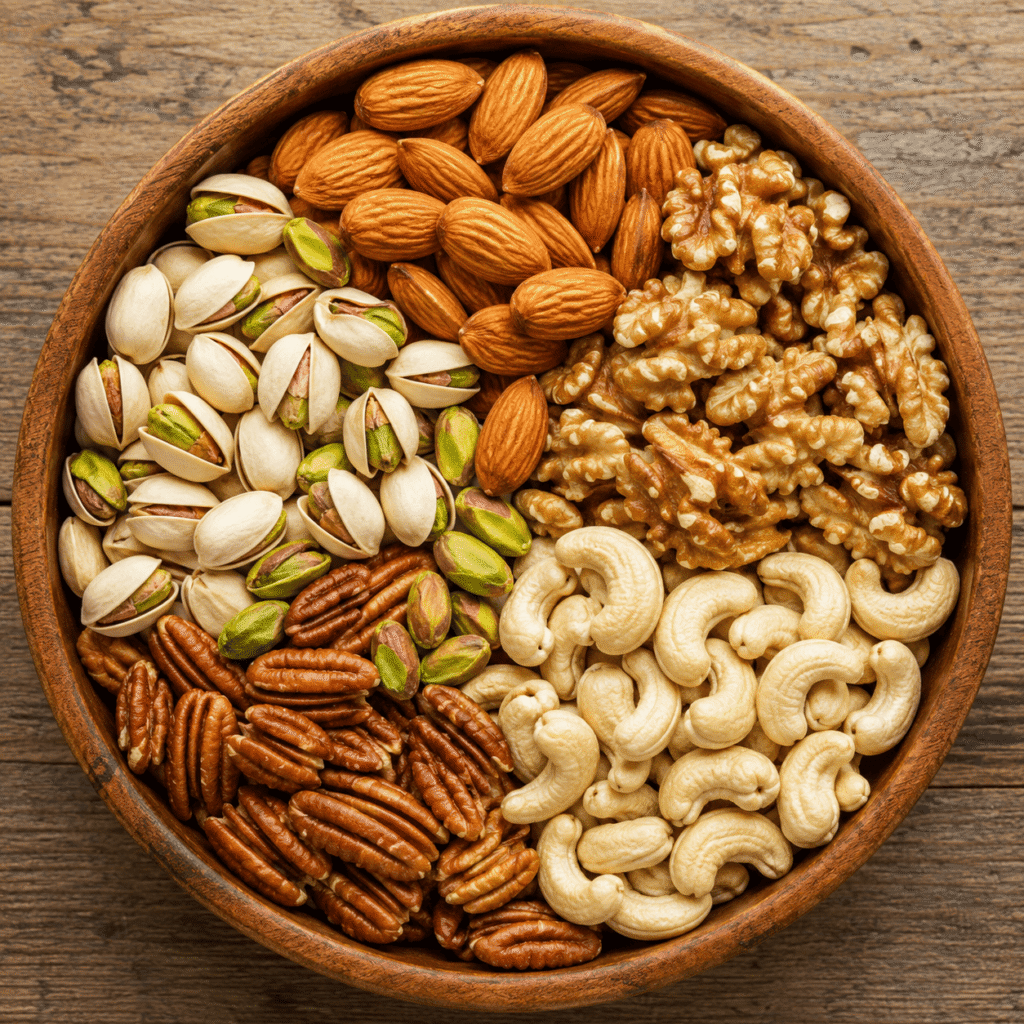
A standard mixed-nut blend usually includes some combination of peanuts (technically a legume, not a tree nut), almonds, walnuts, cashews, pecans, hazelnuts, and Brazil nuts. Nutritionally, these are not interchangeable. The exact ratio also isn’t standardized — a bargain grocery-store mix might be dominated by cheaper peanuts and cashews, while a premium blend might lean heavily on almonds, walnuts, and pecans, which is one reason two people eating “the same snack” can walk away with genuinely different bowel outcomes.
Fiber Content Varies a Lot by Nut
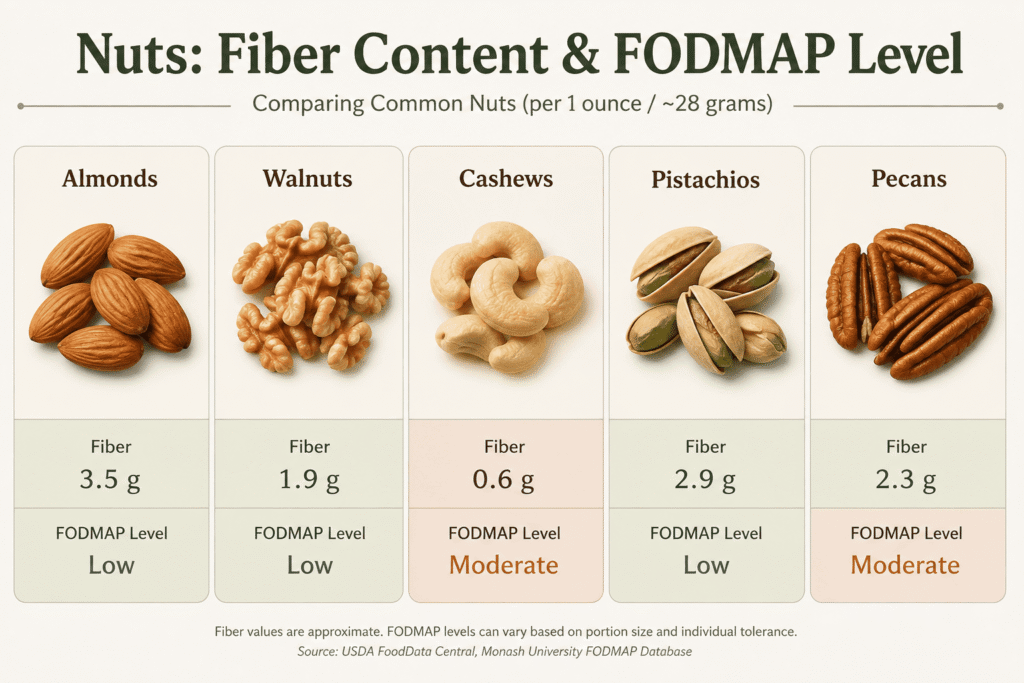
Almonds and pistachios tend to sit near the top of the fiber range for common nuts, delivering somewhere around 3 to 3.5 grams per ounce. Walnuts and pecans provide a more moderate amount, closer to 2 grams per ounce. Cashews and macadamias sit toward the lower end. Since fiber is one of the main drivers of stool bulk and regularity, a mixed-nut bag that’s heavy on cashews will behave differently in your gut than one that’s heavy on almonds and pistachios, even though both bags are technically “mixed nuts.”
Fat Slows Down Digestion When You Overdo It
Nuts are calorie-dense largely because of their fat content, and fat has a real effect on gastric emptying — it slows the rate at which the stomach releases its contents into the small intestine. In modest amounts, this is unremarkable. In large amounts, particularly when eaten quickly or on an empty stomach, it can genuinely slow transit and contribute to a feeling of sluggish digestion or constipation in some people, especially if fluid intake doesn’t increase alongside it.
Some Nuts Carry a Bigger Fermentable-Carbohydrate Load Than Others
This is the piece most general “nuts and digestion” articles skip. Nuts vary considerably in their content of fermentable oligosaccharides — the carbohydrates behind the FODMAP framework used in IBS management. Cashews and pistachios are considered high-FODMAP even in small servings, largely due to their galacto-oligosaccharide and fructan content, while almonds and hazelnuts are only low-FODMAP in servings of around 10 nuts or fewer. Macadamias, pecans, walnuts, and peanuts are comparatively low across typical serving sizes. For someone with a sensitive gut or diagnosed IBS, a mixed-nut bag heavy on cashews and pistachios can trigger gas, bloating, and loose stools in a way that a walnut-and-pecan mix simply won’t.
Can Mixed Nuts Cause Constipation?
Occasionally, yes, though it’s rarely the nuts alone. The scenario that most commonly produces constipation-like symptoms is a sudden, large increase in nut intake — say, snacking on several handfuls a day when your gut wasn’t previously used to that much fat and fiber at once — combined with unchanged or inadequate fluid intake. This pattern shows up often around the holidays, when bowls of mixed nuts sit out for weeks and daily intake quietly climbs well past a typical single serving. Fiber only does its job well when there’s enough water available to keep the added bulk soft; without it, a fiber increase can paradoxically make stools harder to pass rather than easier. Raw nuts also contain phytic acid, a compound that binds minerals and is somewhat reduced by soaking or roasting, though its practical effect on stool consistency is minor compared with the fiber-and-fluid balance described above.
If constipation is your main concern, our guide to herbs that support constipation relief covers additional options that work alongside dietary fiber sources like nuts.
Can Mixed Nuts Cause Diarrhea?
This is more often the culprit when people say nuts “don’t agree with them.” Three mechanisms typically explain it. First, a large fat load reaching the small intestine can trigger stronger downstream gut contractions in people who are sensitive to this fat-driven signal, sometimes producing looser, more urgent stools. Second, overeating any high-fiber food quickly — nuts included — can outpace the colon’s ability to process the added bulk smoothly. Third, and most commonly overlooked, the high-FODMAP nuts in a mixed blend (cashews and pistachios in particular) can be rapidly fermented by colonic bacteria, drawing water into the bowel and speeding transit in people with IBS or a generally FODMAP-sensitive gut. A person who tolerates almonds and walnuts fine may still react to the cashews sitting in the same bag.
What a Real Study Found About Mixed Nuts and Bowel Movements
Most of the research on nuts and digestion has looked at single nut varieties in isolation, which is part of why “mixed nuts” specifically gets so little dedicated attention. A pilot study that directly compared daily mixed-nut consumption against a control snack over three weeks found that participants eating mixed nuts modestly increased their stool amount and, like the control group, reported significantly less straining during bowel movements by the end of the trial. Stool frequency, hardness, and reported feelings of constipation didn’t differ meaningfully between groups. In short, the available direct evidence suggests mixed nuts are, on balance, mildly supportive of regularity for most healthy adults rather than something to be wary of — while leaving plenty of room for individual variation depending on which nuts are in the mix and how much is eaten.
How to Eat Mixed Nuts Without Upsetting Your Bowel Movements
A few practical adjustments cover most of the bowel-related complaints associated with nuts:
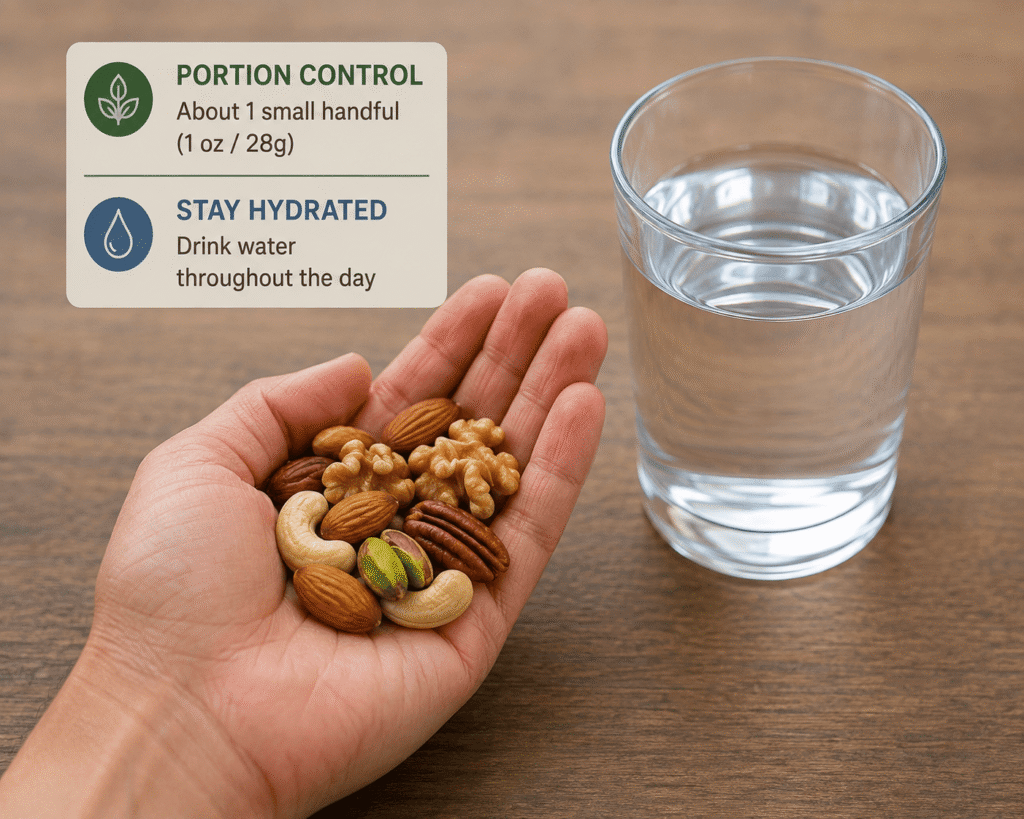
- Stick to a single serving. About one ounce, roughly a small handful, is a reasonable daily amount for most people and matches the portion sizes used in most of the research on nuts and gut health.
- Increase your intake gradually if nuts aren’t already a regular part of your diet, the same way you would with any new fiber source.
- Drink enough water. Fiber needs fluid to do its job; adding nuts without adjusting hydration is a common setup for feeling backed up rather than regular.
- Notice which specific nuts trigger symptoms. If you react badly to a store-bought mix, try isolating cashews and pistachios for a couple of weeks to see if symptoms improve, since these carry the highest fermentable-carbohydrate load of the common mixed-nut varieties.
- Chew thoroughly. Nuts are dense and fibrous; inadequate chewing increases the amount of mechanical and fermentation work your gut has to do on large fragments.
- Consider roasted over raw if you notice bloating specifically, since roasting can modestly reduce some of the harder-to-digest compounds in the outer nut structure.
- Check the blend composition if you buy pre-mixed bags. Store brands vary widely in their ratio of cashews and pistachios to lower-FODMAP options like almonds, walnuts, and pecans, so two “mixed nuts” products on the same shelf can behave quite differently in your gut.
If gas and bloating are your main complaint rather than constipation or diarrhea, our article on burping and excessive gas walks through the broader FODMAP and fiber-pacing principles that apply here too.
When Changes in Bowel Movements After Eating Nuts Need Medical Attention
Mild, occasional bloating or a single loose stool after a large serving of nuts isn’t usually a red flag. See a doctor if you notice any of the following, since these point toward something beyond ordinary dietary sensitivity:
- Reflexive symptoms after eating even small amounts of nuts, such as hives, swelling of the lips or throat, or difficulty breathing — this needs urgent evaluation for a possible nut allergy, which is a distinct and potentially serious condition unrelated to the digestive effects discussed here
- Persistent diarrhea or constipation that doesn’t resolve when nuts are removed from the diet
- Blood in the stool, unexplained weight loss, or abdominal pain that’s severe or worsening
- Bowel symptoms that started around the same time as other new digestive complaints, which may point to an underlying condition like IBS or celiac disease rather than a simple food reaction
FAQ About Mixed Nuts and Bowel Movements
Why do nuts make some people poop right after eating them?
For some people, a large fat load reaching the small intestine triggers a stronger gastrocolic reflex — the normal reflex that ramps up colon activity in response to food entering the gut. This response varies a lot between individuals, which is why the same handful of nuts can send one person to the bathroom quickly while barely affecting someone else.
Are almonds or walnuts better than a mixed bag for constipation?
Almonds and walnuts are reasonable standalone choices because of their solid fiber content and lower fermentable-carbohydrate load compared with cashews or pistachios. A mixed bag isn’t inherently worse, but if you’re specifically targeting constipation relief, a blend where almonds, walnuts, and pistachios (in tolerable amounts) make up most of the mix will generally support regularity more predictably than one heavy in lower-fiber varieties.
Can eating too many mixed nuts cause bloating even without constipation or diarrhea?
Yes. Bloating from nuts is often separate from changes in stool frequency or consistency, and it’s usually driven by fermentation of the FODMAP content in cashews and pistachios rather than by fiber or fat alone. You can be perfectly regular and still feel gassy after a large serving.
Do nuts count toward daily fiber goals the same way vegetables or whole grains do?
Yes, nuts contribute meaningfully to daily fiber intake, though the amount per serving is generally smaller than what you’d get from a comparable serving of legumes or whole grains. They’re best thought of as one contributor among several rather than a primary fiber source on their own.
Do salted or roasted nuts affect bowel movements differently than raw nuts?
Roasting doesn’t meaningfully change fiber or fat content, but it can slightly reduce certain compounds that make raw nuts a bit harder to digest for some people. Salt itself doesn’t directly change stool consistency in typical snack-sized amounts, but heavily salted nuts can encourage overeating and, in people prone to fluid retention, may contribute to a bloated feeling that’s easy to mistake for a digestive reaction to the nuts themselves.
This article is intended for general education about digestive health and isn’t a substitute for personalized medical advice. If nuts are consistently causing significant digestive symptoms, or if you suspect a nut allergy, please see a doctor for an evaluation tailored to your situation.