You finished the antibiotics. The fever’s long gone. But the dull ache in your lower left belly never actually left. It just quieted down.
If that sounds familiar, you may be dealing with smoldering diverticulitis. It’s a pattern where diverticulitis simmers at a low level, instead of fully resolving between episodes.
It’s a real, recognized clinical picture. But it rarely gets explained clearly. Scans come back reassuring. Bloodwork looks “basically normal.” And you’re still not feeling normal at all.
This guide walks through what smoldering diverticulitis actually is. You’ll see how it differs from a typical flare, and from a couple of look-alike conditions. We’ll cover what seems to drive it, and what tends to actually help.
What Is Smoldering Diverticulitis?
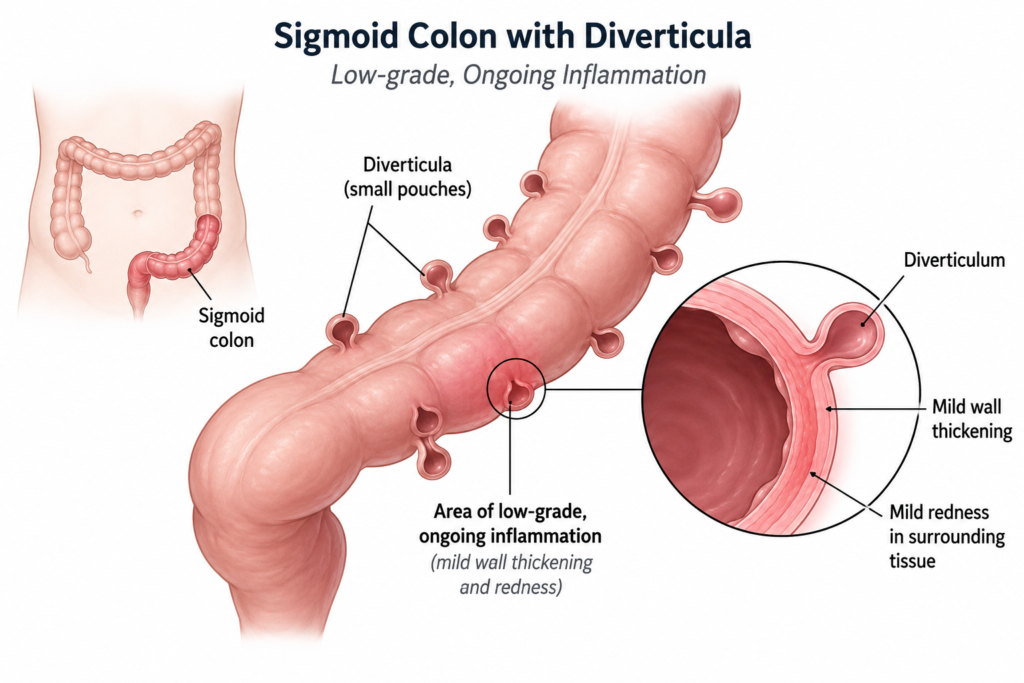
Diverticulitis usually shows up as a single, sharp episode. Left-sided abdominal pain, fever, and inflammation markers that show up clearly on bloodwork and a CT scan. Treat it, and within a week or two, most people are back to normal.
Smoldering diverticulitis doesn’t follow that script. Instead of resolving cleanly, the inflammation never fully settles. Doctors generally describe it as left lower quadrant pain with ongoing inflammation that lasts at least three months. It doesn’t respond to a standard course of antibiotics and dietary adjustment. And importantly, it doesn’t progress to a more dangerous complication like an abscess or a perforation.
In plain terms: it isn’t a fresh infection each time. And it isn’t a surgical emergency. It’s inflammation stuck in a low gear. Active enough to keep causing symptoms, but not sharp enough to look like a classic flare on every test.
It’s also genuinely under-discussed. Most patient-facing content about diverticulitis covers the acute episode. If your experience doesn’t match that story, it can be hard to even find the words for it.
Smoldering Diverticulitis vs. a Typical Flare
The distinction matters. It changes what your doctor watches for, and how they’ll treat you.
A typical (acute) diverticulitis flare:
- Comes on over hours to a couple of days
- Usually involves fever and a clearly elevated white blood cell count
- Responds to a course of antibiotics and a short period of bowel rest
- Resolves fully between episodes
Smoldering diverticulitis:
- Persists for weeks to months, not days
- May cause a low-grade fever, or none at all
- Doesn’t fully settle with a standard antibiotic course or dietary changes
- Leaves you with a baseline ache, punctuated by worse stretches, rather than a clean flare-and-recovery cycle
Some people arrive at smoldering diverticulitis after one bad episode that never quite resolved. Others notice their flares creeping closer together, with shorter gaps of feeling normal in between. That second pattern is worth flagging to your GI doctor directly. It changes how aggressively the condition typically gets managed.
Smoldering Diverticulitis, SUDD, or IBS? Untangling the Overlap
Here’s where it gets genuinely confusing, even for patients who’ve done their homework. Smoldering diverticulitis isn’t the only condition that causes ongoing, diverticula-related belly pain. Two others get mixed in constantly.
Symptomatic uncomplicated diverticular disease (SUDD) is a separate, distinct entity, even though the names get used loosely online. Both cause recurring left lower quadrant pain and bowel habit changes in someone with known diverticula. But a 2023 clinical review in Clinical and Experimental Gastroenterology draws a clear line between them. SUDD happens without the systemic inflammation that smoldering diverticulitis still shows on and off. That means normal white blood count, normal CRP, no fever. Low-grade local inflammation is still present in SUDD, though. It usually shows up as elevated fecal calprotectin, a stool marker doctors can test for directly.
Irritable bowel syndrome (IBS) overlaps with both. According to that same review, the clue that tends to separate SUDD from IBS is how the pain behaves. SUDD pain is usually prolonged, often lasting over 24 hours. It stays localized to the left lower quadrant, and typically isn’t relieved by a bowel movement. IBS pain tends to be shorter-lived and more diffuse. It recurs more often, and classically eases somewhat after you go. SUDD also tends to affect older men more, while IBS skews toward younger women.
Why does the label matter this much? Because it changes the workup, and eventually, the treatment. Sometimes IBS gets mislabeled as diverticular disease, or the reverse happens. Ruling that out matters. Unaddressed IBS is linked to worse outcomes if surgery for diverticular disease ever becomes part of the conversation. Most GI specialists want it excluded first.
If gas and bloating loom just as large as the pain, it’s worth reading how excess gas and bloating actually develop. The two patterns frequently travel together.
What Causes Smoldering Diverticulitis
Researchers don’t have this fully mapped out. But a few mechanisms keep showing up in the literature. Together, they help explain why the inflammation gets “stuck” instead of resolving.
Low-grade mucosal inflammation. Even after an acute infection clears, some of the tissue around the diverticula doesn’t fully calm down. Studies on related diverticular disease have found ongoing inflammatory markers in patients whose standard bloodwork looks otherwise normal. Elevated fecal calprotectin is the most commonly cited example.
Altered gut microbiota. Research has found something consistent in people with ongoing diverticular symptoms. They tend to have fewer of the bacteria that produce short-chain fatty acids — acids that normally help keep the colon lining calm. These patients also tend to have lower levels of Akkermansia muciniphila, a species that supports the gut’s protective barrier.
Nerve and muscle changes. Chronic inflammation appears to change how sensitive the colon’s nerves are. It also affects how the surrounding muscle contracts — a pattern sometimes called visceral hypersensitivity. Some studies have found fewer of the specialized “pacemaker” cells that coordinate colon muscle movement. They’ve also found more inflammatory cells sitting inside the nerve clusters that run through the colon wall. The practical result: a gut that moves differently, and reports pain more readily than it used to.
A few risk factors line up with acute diverticulitis, too. Low physical activity, obesity, smoking, and regular NSAID use are all associated with more complicated or persistent diverticular disease. Interestingly, a low-fiber diet on its own hasn’t been shown to cause diverticula to form in the first place. Fiber still plays a real role in managing symptoms once diverticula are there, though.
None of this is a checklist of things you did wrong. It’s simply a description of why the condition can be so stubborn.
Symptoms and Warning Signs
Smoldering diverticulitis tends to show up as:
- A dull, persistent ache in the left lower abdomen that never fully resolves
- Bouts of constipation, looser stools, or an unpredictable mix of both
- Bloating and excess gas
- Fatigue that seems to track with how your gut is doing that week
- Tenderness when you press on the lower left abdomen
- A low-grade or absent fever, unlike a full flare
If bloating is your dominant symptom, and you’re not sure whether it’s diverticular or something more mundane, our guide to ordinary water-related bloating can help you tell the difference.
Get medical attention promptly — not at your next routine visit — if you develop a high fever or rapidly worsening pain. The same goes for vomiting that won’t stop, an inability to pass gas or stool, or blood in your stool. These point toward a genuine complication, like an abscess, obstruction, or perforation, rather than the smoldering pattern. They need same-day evaluation.

Getting a Diagnosis
There’s no single blood test that says “smoldering diverticulitis” on the label. Diagnosis is really a process of ruling things in and out.
Your doctor will typically start with:
- A physical exam, including checking for tenderness over the sigmoid colon
- Blood tests — a complete blood count and CRP, looking for the low-grade or absent elevation that separates this from an acute flare
- Fecal calprotectin, which can support a diagnosis of ongoing low-grade inflammation and help distinguish it from IBS
- Imaging, usually CT scanning or intestinal ultrasound, mainly to rule out a missed abscess, stricture, or early perforation
Colonoscopy is usually recommended once things have calmed down enough to do it safely. It confirms the diverticula, and makes sure nothing else has been missed. The National Institute of Diabetes and Digestive and Kidney Diseases confirms this kind of follow-up is standard after a diverticulitis episode. It’s usually paired with fiber, medication, and lifestyle changes for ongoing symptoms.
Smoldering diverticulitis, SUDD, and IBS can look nearly identical from the outside. So expect your doctor to lean on this combination of tests, rather than symptoms alone.
Treating Smoldering Diverticulitis: What Actually Helps
There isn’t one universally agreed-upon protocol. That’s largely because smoldering diverticulitis is less studied than either acute diverticulitis or SUDD. Treatment generally borrows from both, and tends to combine a few approaches rather than relying on just one.
Gut-targeted antibiotics. A poorly absorbed antibiotic called rifaximin is commonly used in short monthly cycles, rather than continuously. It works locally in the gut, with a low risk of resistance or body-wide side effects. Trials combining cyclic rifaximin with a high-fiber diet have generally shown better symptom control than fiber alone. That’s according to the review mentioned earlier.
Anti-inflammatory therapy. Mesalazine is an anti-inflammatory medication used in other bowel conditions. It’s sometimes tried for its effect on low-grade mucosal inflammation. The evidence for it is mixed — some trials show reduced recurrence, others show little benefit. It tends to be a case-by-case decision rather than a default.
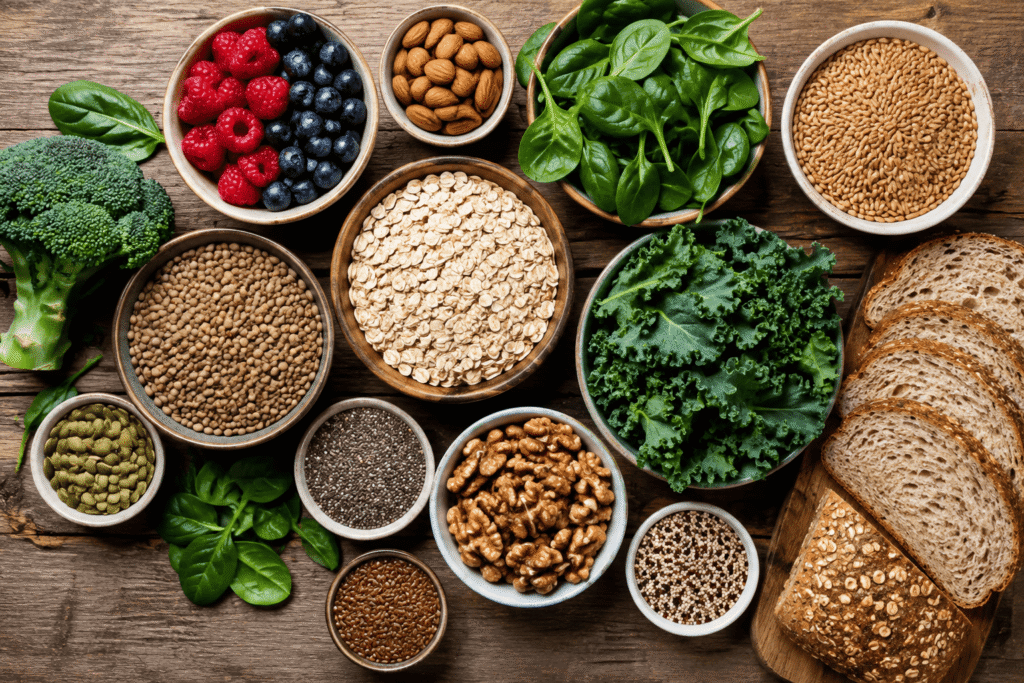
A high-fiber diet, generally built around whole grains, fruits, and vegetables rather than supplements alone.
Probiotics show some promise for easing bloating and irregular bowel habits. The evidence is still thin, though, and not every guideline recommends them.
Pain control typically favors acetaminophen or antispasmodic medications over NSAIDs like ibuprofen. NSAIDs are linked to a higher risk of diverticular complications.
None of this is meant as a do-it-yourself protocol. The right combination depends on your specific symptoms and test results. That’s a conversation for your gastroenterologist, not a checklist to start on your own.
Diet and Lifestyle Adjustments That Support Recovery
Alongside whatever medical treatment your doctor recommends, a few lifestyle factors consistently show up as helpful:
- Build up fiber gradually. A sudden jump can worsen bloating and gas before things improve. Adding a few grams every few days gives your gut time to adjust.
- Stay physically active. Regular movement is one of the more consistently protective factors against diverticular complications across multiple studies.
- Don’t fear nuts, seeds, popcorn, or corn. The old advice to avoid them has been specifically studied and disproven. They don’t raise diverticulitis risk.
- Reconsider regular NSAID use. If you take ibuprofen or aspirin often for something unrelated, talk to your doctor about alternatives.
- If you smoke, this is one more good reason to quit. Smoking is independently linked to more symptomatic diverticular disease.
If constipation is part of your pattern, our guide to fiber-forward herbs for constipation covers gentle ways to build up fiber intake without overwhelming a sensitive gut.
When Smoldering Diverticulitis Needs Surgery
Surgery isn’t the first move for smoldering diverticulitis. But it’s a legitimate option once symptoms have dragged on despite genuine medical treatment. That’s especially true once quality of life has taken a real hit.
The usual procedure is a sigmoidectomy — removing the affected segment of colon — typically done laparoscopically. Studies looking specifically at surgery for chronic, treatment-resistant diverticular symptoms report meaningful improvement. Most patients who reach this point see real gains in both pain and quality of life.
Before recommending surgery, most GI specialists will want to rule out IBS as the real driver of your symptoms. Unaddressed IBS is associated with symptoms persisting even after the affected colon segment is removed. It’s one more reason the differentiation discussed earlier isn’t just academic.
Surgery carries real risks and a real recovery period, like any operation. It doesn’t guarantee every symptom will resolve, either. It’s generally reserved for people who’ve given medical management a genuine trial and are still struggling. That’s a decision made together with a colorectal surgeon — not a first response to an uncomfortable diagnosis.
FAQ: Smoldering Diverticulitis Questions, Answered
Is smoldering diverticulitis dangerous?
On its own, it isn’t considered an emergency the way acute, complicated diverticulitis is. But it can be hard to distinguish from the early signs of a genuine complication. Any new fever, worsening pain, or bleeding should be evaluated urgently, rather than assumed to be “just” the smoldering pattern.
How long does smoldering diverticulitis last?
It varies widely. Some people improve within a few months of consistent treatment. Others deal with a waxing-and-waning course for years. That unpredictability is part of what makes it frustrating. It’s also why tracking your own symptom pattern for your doctor genuinely helps.
Can smoldering diverticulitis turn into a serious flare or complication?
It can, though that isn’t the most common path. It’s part of why doctors keep monitoring the condition, rather than dismissing it once initial tests come back reassuring.
Is smoldering diverticulitis the same thing as diverticulosis?
No. Diverticulosis simply means you have diverticula — the small pouches themselves. That’s extremely common with age, and usually causes no symptoms at all. Smoldering diverticulitis specifically means those diverticula have become a source of ongoing, low-grade inflammation.
Should I avoid nuts, seeds, and popcorn permanently?
No. That advice is outdated, and isn’t supported by current evidence, as covered in the diet section above.
This article is intended for general education about digestive health, and isn’t a substitute for personalized medical care. If you’re dealing with ongoing abdominal pain, please see a gastroenterologist for a full evaluation. Don’t self-diagnose from an article — smoldering diverticulitis shares symptoms with several other conditions that are managed very differently.