Why Vegetables for Acid Reflux Deserve a Closer Look
That burning sensation behind your breastbone after dinner is one of the most common digestive complaints out there. If you’re dealing with frequent heartburn, you’ve probably already heard that diet plays a role — and vegetables for acid reflux are often the first place people look for relief. But not all vegetables are created equal here.
Some calm an irritated esophagus and support steady digestion. Others, however healthy they seem in general, can trigger symptoms in people prone to reflux. This guide breaks down which vegetables tend to help, which ones to watch, and how to prepare them so they work with your gut instead of against it.
What Happens in Your Body During Acid Reflux
Acid reflux happens when the lower esophageal sphincter (LES) — the muscular valve between your stomach and esophagus — relaxes at the wrong time. Stomach acid then splashes upward, irritating the esophageal lining and causing that familiar burn.
A few factors influence how often this happens:
- Pressure inside the stomach. Large meals and certain foods increase pressure, pushing acid upward more easily.
- LES tone. Some foods and drinks relax the LES itself, making reflux more likely regardless of meal size.
- How long food sits in the stomach. Fatty, heavy meals slow digestion and give acid more time and opportunity to reflux.
Vegetables generally sit on the gentler end of this equation. Most are low in fat, low in the compounds known to relax the LES, and rich in fiber that supports regular digestion. That’s part of why building meals around the right vegetables for acid reflux management can make a noticeable difference — though, as with most digestive symptoms, individual triggers vary from person to person.
Fiber matters more here than people usually expect. It helps food move through the digestive tract at a steady pace instead of sitting and fermenting, which can otherwise contribute to bloating and added abdominal pressure. That pressure has to go somewhere — and pushing upward against the LES is one of the more common outcomes. Body weight and posture play a similar role: carrying extra pressure around the midsection, or lying down soon after eating, both make it mechanically easier for acid to travel the wrong way. None of this is about any single food being “good” or “bad” in isolation — it’s about the overall load you’re putting on that valve at any given meal.
The Best Vegetables for Acid Reflux Relief
Certain vegetables tend to be well tolerated by people with reflux because they’re low in acid, low in fat, and gentle on the stomach lining. Here are the categories worth building meals around.
Leafy Greens
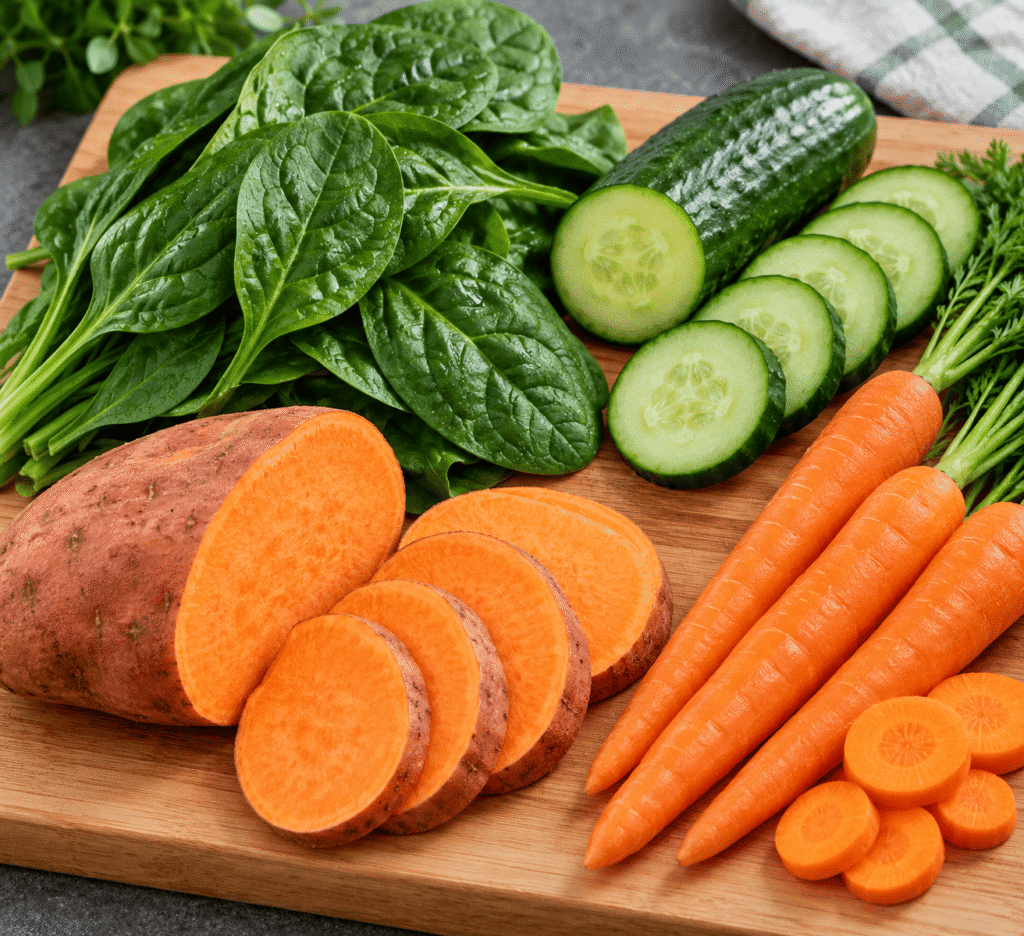
Spinach, kale, and romaine are low in fat and naturally low-acid, which may help avoid adding to stomach acidity for some people. They’re also rich in fiber, supporting the kind of regular digestion that can ease the pressure contributing to reflux.
Try: a simple sauté with olive oil, or blended into a smoothie with a low-acid fruit like banana. Go easy on citrus additions, since they’re a common trigger.
Root Vegetables
Sweet potatoes, carrots, and beets are mild, easy to digest, and naturally low in acid. Their fiber content also helps keep digestion moving, which matters — slower gastric emptying is linked to more frequent reflux episodes.
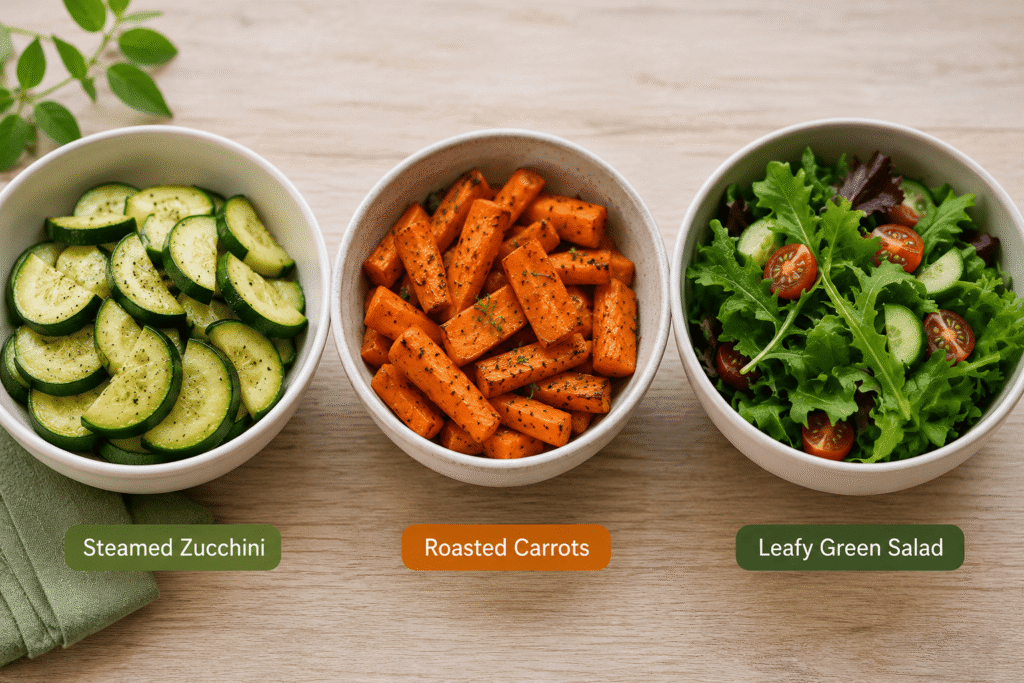
Try: roasting with a light drizzle of oil rather than butter or a heavy sauce.
Cucumbers and Squash
Cucumber, zucchini, and yellow squash carry high water content and very low acid and fat — a gentle combination for an already sensitive esophagus.
Try: lightly steamed, or added raw to salads for a cooling, low-trigger side dish.
Cruciferous Vegetables (In Moderation)
Broccoli, cauliflower, and Brussels sprouts are low in acid and fat, which puts them in the reflux-friendly column overall. The catch is that they’re also known for producing gas during digestion, and for some people that added bloating translates into more pressure on the LES.
This doesn’t mean avoiding them — it means paying attention to your own response. Well-cooked, smaller portions tend to be easier to tolerate than large raw servings, and pairing them with easily digested foods rather than a heavy, fatty meal can help too.
Try: steaming until fork-tender, then finishing with olive oil and herbs instead of a cream- or cheese-based sauce.
Vegetables for Acid Reflux That May Trigger Symptoms
Not every vegetable is reflux-friendly. A handful of otherwise healthy vegetables are commonly reported triggers, largely because of their acidity or their effect on the LES.
- Tomatoes. Highly acidic; sauces and raw tomatoes are frequently reported triggers.
- Onions, especially raw. Some research links onions to LES relaxation and increased reflux symptoms.
- Garlic. Similar to onions, garlic can relax the LES in sensitive individuals, though many people tolerate it well.
- Peppers, particularly spicy varieties. Capsaicin can irritate an already-sensitive esophageal lining.
- Pickled or fermented vegetables, like sauerkraut and pickles. The vinegar and fermentation process that give them their tang also makes them quite acidic, which is enough to bother some people with reflux even though the base vegetable would otherwise be fine.
None of this means these vegetables are “bad.” Plenty of people with reflux eat them without issue. Trigger foods are highly individual, and the most reliable way to find yours is tracking symptoms against meals over a couple of weeks rather than eliminating whole food groups upfront.
Cooking Vegetables for Acid Reflux the Right Way
How a vegetable is prepared can matter as much as which vegetable you choose. A reflux-friendly vegetable cooked the wrong way can still cause problems.
- Skip the fryer. Frying adds fat, which slows digestion and can relax the LES. Roasting, steaming, grilling, and light sautéing are gentler options.
- Go light on seasoning. Chili, black pepper, and heavy garlic or onion seasoning can all act as triggers. Fresh herbs like basil, parsley, or dill are milder alternatives.
- Watch the fat. Butter, cream sauces, and cheese-heavy toppings add up quickly. A drizzle of olive oil usually does the job without the extra load.
- Mind your portions. Even reflux-friendly vegetables can contribute to an overfilled stomach as part of a large meal. Smaller, more frequent plates tend to be easier on the LES than one big dinner.
- Check your dressings and marinades. A perfectly gentle vegetable can turn into a trigger once it’s coated in a vinegar-heavy dressing, a squeeze of citrus, or a marinade built around garlic and chili. A simple olive oil and herb dressing is usually the safer default.
- Eat slowly. Wolfing down a plate of vegetables — or any food — means swallowing more air and giving your stomach less time to signal that it’s full, both of which can add to reflux risk.
A Sample Day of Vegetables for Acid Reflux
Putting this into practice doesn’t have to be complicated. Here’s what a reflux-friendly day built around vegetables might look like:
- Breakfast: Spinach and egg-white scramble with a side of roasted sweet potato.
- Lunch: Grilled chicken with steamed zucchini, carrots, and a small portion of brown rice.
- Snack: Sliced cucumber with a mild hummus.
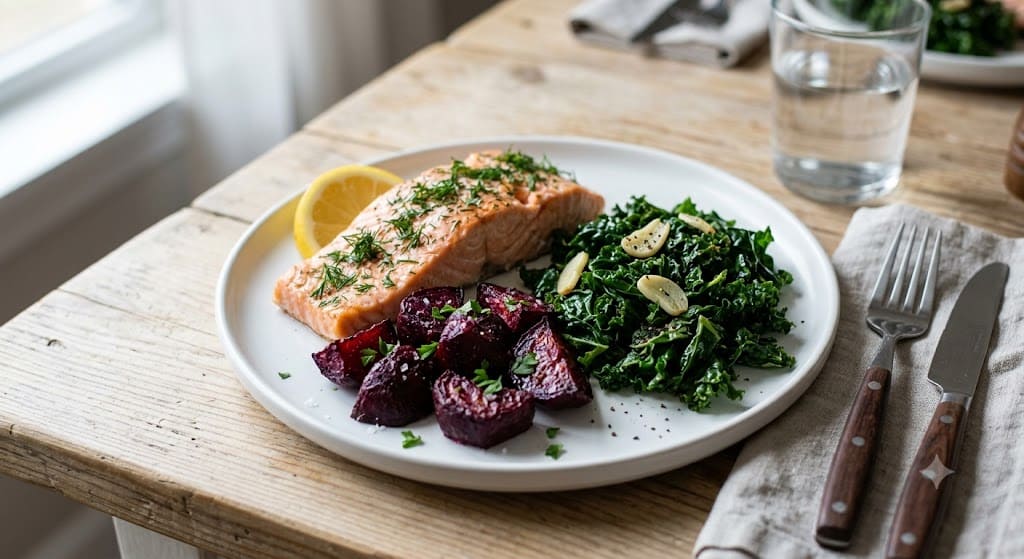
- Dinner: Baked salmon with roasted beets and sautéed kale, olive oil in place of butter.
Notice what’s missing: fried preparations, tomato-based sauces, heavy cream, and raw onion or garlic in large amounts. Notice, too, that each meal leans on the same handful of principles from earlier — low fat, low acid, moderate portions, and gentle cooking methods — rather than a strict or unusual food list. Small swaps like these, applied consistently, are usually what make the biggest difference over time, more so than any single “miracle” vegetable.
Habits That Help Your Vegetables for Acid Reflux Choices Work Better
Diet is one lever, but it works best alongside a few other habits. These won’t replace the food choices above — they support them.
- Eat smaller, more frequent meals. A stomach that’s less full puts less pressure on the LES than one large dinner does.
- Stay upright after eating. Give your body two to three hours before lying down, so gravity can help keep stomach contents where they belong.
- Go easy on alcohol, caffeine, and carbonated drinks. All three are known to relax the LES or increase stomach pressure, working against the benefit of a reflux-friendly plate.
- Elevate the head of your bed if nighttime symptoms are common. A slight incline can reduce how easily acid travels upward while you sleep.
- Mind portion size at the vegetables themselves. Even low-trigger vegetables, eaten in a very large volume at once, can stretch the stomach and contribute to reflux.
None of these require a total lifestyle overhaul. Most people do best layering in one or two changes at a time and noticing what actually moves the needle for their own symptoms.
FAQ: Vegetables for Acid Reflux Questions Answered
Are raw vegetables worse than cooked vegetables for reflux?
Not inherently. What matters more is the specific vegetable and any added fat or seasoning. Raw cucumber or lettuce is typically well tolerated, while raw onion or garlic is more likely to cause symptoms than the cooked version of the same food.
Can vegetable juice help with acid reflux?
Some people find non-citrus, non-acidic vegetable juices — like cucumber or celery juice — soothing. But juicing removes fiber, which plays a helpful role in digestion. Whole vegetables are generally the better everyday choice.
Is a fully alkaline diet necessary for reflux relief?
Not necessarily. While low-acid eating patterns help some people, there’s no need to eliminate all acidic foods. Building most meals around gentle vegetables while noticing your personal triggers is a more realistic, sustainable approach than an all-or-nothing diet.
How long does it take to notice a difference?
This varies by person. Some people notice less frequent heartburn within a week or two of consistent dietary changes, while others need more time paired with other lifestyle adjustments, like meal timing and staying upright after eating.
Do frozen vegetables work as well as fresh ones for reflux?
Yes, in most cases. Plain frozen vegetables — without added sauces, cheese, or seasoning blends that lean heavy on garlic, onion, or chili — are nutritionally similar to fresh and just as reflux-friendly. Check the label, since some frozen vegetable mixes come pre-seasoned in ways that reintroduce common triggers.
What about starchy vegetables like potatoes and corn?
Plain potatoes and corn are low in acid and generally well tolerated. The concern is usually preparation rather than the vegetable itself — french fries, loaded baked potatoes, and creamed corn bring in the fat and richness that tend to aggravate reflux, while a baked or boiled potato with a light topping typically doesn’t.
Are green smoothies a good idea for acid reflux?
Often, yes — a smoothie built on spinach or kale, a low-acid fruit like banana, and a non-dairy or low-fat liquid base tends to be gentle. Where people run into trouble is adding a lot of citrus, pineapple, or full-fat dairy, which can turn an otherwise soothing smoothie into a trigger.
When to See a Doctor About Acid Reflux
Occasional heartburn after a big or spicy meal is common and usually not a concern. But it’s worth checking in with a doctor if you experience:
- Heartburn more than twice a week
- Difficulty or pain when swallowing
- Unintended weight loss
- Chronic cough, hoarseness, or a persistent lump-in-the-throat sensation
- Symptoms that don’t improve with dietary changes
These can be signs of GERD or another condition that benefits from a proper evaluation rather than diet changes alone.
This article is intended for general education and isn’t a substitute for personalized medical advice. If you’re managing ongoing acid reflux or GERD, talk with a doctor or registered dietitian about an approach that fits your health history.