If you just got a report back with the words “fatty liver” on it, you’re probably somewhere between relieved (it wasn’t something scarier) and unsettled (what does this actually mean for me?). Here’s the piece of news most people don’t hear clearly enough in that appointment: for the vast majority of people, this is one of the few liver conditions you can genuinely undo. Learning how to reverse fatty liver isn’t about a miracle supplement or a liver “detox” — it’s about a specific, evidence-backed sequence of changes that give an overloaded liver room to clear itself out.
I see this condition constantly in gastroenterology and hepatology clinic, and I’ve watched patients turn abnormal ultrasounds and elevated liver enzymes back to normal within months of consistent effort. What follows is the actual roadmap — what moves the needle, what doesn’t, and why the gut plays a bigger role in this than most fatty liver guides ever mention.
What “Fatty Liver” Actually Means (and Why It’s Now Called MASLD)
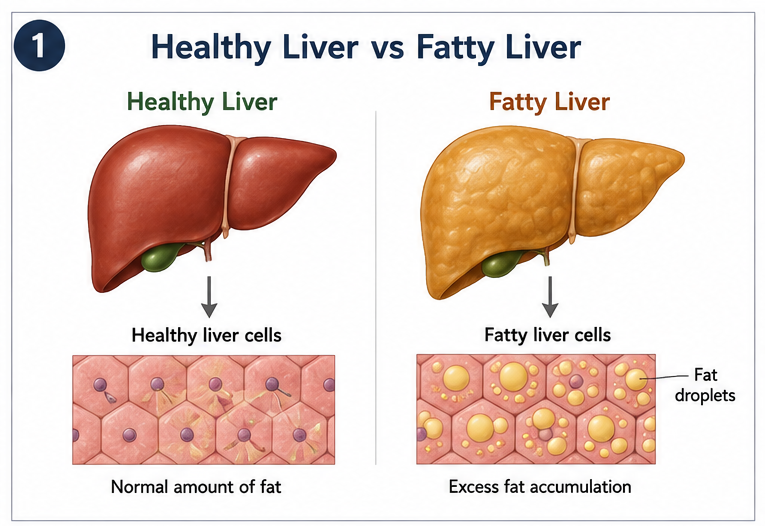
Fatty liver — medically known as hepatic steatosis — means fat has accumulated inside more than 5% of your liver cells. Your liver is built to handle some fat traffic; it’s part of how it processes energy. The problem starts when fat storage outpaces fat clearance, and the liver starts looking more like a warehouse than a processing plant.
In 2023, the major international liver societies (AASLD, EASL, and ALEH) renamed the condition. Metabolic dysfunction-associated steatotic liver disease (MASLD) replaced the older term “nonalcoholic fatty liver disease” (NAFLD) — same underlying disease, but a name that reflects what’s actually driving it: metabolic dysfunction, not just the absence of alcohol. You’ll still see NAFLD in a lot of patient materials since the terminology shift is recent, but they’re referring to the same condition.
There’s a meaningful reason the “why it’s called that” matters for how to reverse fatty liver: MASLD is defined by having liver fat plus at least one cardiometabolic risk factor — things like insulin resistance, elevated blood pressure, high triglycerides, or extra weight around the middle. That framing is useful because it tells you where treatment actually has to aim. This isn’t a liver-only problem; it’s a whole-body metabolic problem that happens to show up first in the liver.
Is Fatty Liver Actually Reversible?
Yes — with an important caveat about timing. The liver is one of the few organs in the body with genuine regenerative capacity, and in the earlier stages (simple steatosis, before significant scarring has set in), the fat itself can clear remarkably fast once the right changes are in place.
The caveat: fatty liver exists on a spectrum. Simple fat accumulation (steatosis) can progress to metabolic dysfunction-associated steatohepatitis (MASH, formerly NASH), where the liver becomes inflamed, and eventually to fibrosis and cirrhosis if it goes unaddressed for years. Steatosis and early inflammation are reversible. Advanced fibrosis is much harder to fully undo, though even then, halting further progression is a genuinely meaningful outcome. This is exactly why the question isn’t just how to reverse fatty liver in the abstract — it’s how to do it now, while you’re still in the window where reversal is straightforward.
There’s currently no approved medication whose primary job is to reverse fatty liver in most patients — a few drugs are used off-label or in specific circumstances, and newer MASH-specific therapies are emerging, but lifestyle change remains the foundation for nearly everyone. That’s not a consolation prize; it’s genuinely the most effective tool we have.
Step 1: Weight Loss — The Fastest Way to Reverse Fatty Liver
If there’s one variable that outperforms everything else on this list, it’s this one. Liver fat responds to weight loss in a fairly predictable, almost dose-dependent way:
- 3–5% body weight loss measurably reduces liver fat content
- 7–10% body weight loss starts reducing liver inflammation and can improve early fibrosis
- Losing weight gradually (roughly 0.5–1 kg per week) is preferable to rapid weight loss, which can paradoxically stress the liver further
For someone weighing 90 kg (about 198 lb), that 7–10% range translates to roughly 6–9 kg (13–20 lb) — a target that’s demanding but genuinely achievable over several months, not something you need to rush.
The mechanism here is straightforward: excess fat, particularly visceral fat around the abdomen, drives insulin resistance. Insulin resistance pushes the liver to both produce more fat internally (a process called de novo lipogenesis) and hang onto the fat it’s already storing. Shrinking that visceral fat mass turns down both problems at once.
Step 2: The Fatty Liver Diet That Actually Works
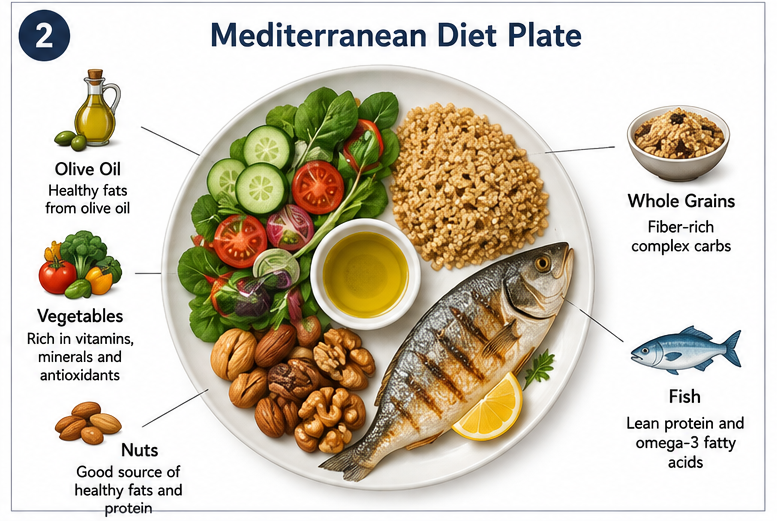
You don’t need a rigid “fatty liver diet” plan with dozens of forbidden foods. The pattern with the strongest evidence behind it is one you’ve likely heard of already: the Mediterranean diet.
What that looks like in practice:
- Prioritize olive oil, vegetables, legumes, whole grains, nuts, and fatty fish (salmon, sardines, mackerel)
- Moderate poultry, eggs, and dairy
- Minimize red and processed meat, refined carbohydrates, and — this is the big one — added sugar
Why Sugar (Especially Fructose) Deserves Special Attention
Fructose, the sugar concentrated in sodas, fruit juices, and many processed snacks, is metabolized almost entirely in the liver. Unlike glucose, which your muscles and other tissues can use directly, a large share of fructose gets converted straight into fat inside liver cells. If you do one single dietary swap this month, cutting sugar-sweetened beverages is probably the highest-yield one.
What About Fruit Itself?
Whole fruit is not the same problem — the fiber slows sugar absorption and the fructose load per serving is modest. Berries, apples, and citrus are genuinely fine, and their antioxidant content is a plus, not a liability.
Coffee: One of the Few Genuine Bright Spots
This one surprises people. Multiple studies link regular coffee consumption — roughly three cups a day is the amount often cited in liver clinics — to lower liver fat and slower fibrosis progression, likely related to compounds in coffee that reduce liver inflammation. If you already drink coffee, there’s no reason to stop; black or lightly sweetened is the better version of that habit.
Step 3: Move — Exercise Helps Reverse Fatty Liver Even Without Weight Loss
This is a detail that gets lost in a lot of “how to reverse fatty liver” advice: exercise reduces liver fat even in people who don’t lose a single pound on the scale. Physical activity improves insulin sensitivity and increases the muscle’s ability to take up glucose, which takes metabolic pressure off the liver directly.
A reasonable, evidence-aligned target:
- 150 minutes per week of moderate-intensity aerobic activity (brisk walking, cycling, swimming) — roughly 30 minutes, five days a week
- Resistance training 2–3 times a week adds benefit on top of aerobic work, since more muscle mass means more capacity to soak up blood sugar
- Consistency beats intensity — a sustainable, moderate routine you’ll actually keep up with outperforms an aggressive plan you abandon in three weeks
You don’t have to hit this target on day one. Even a 10-minute walk after meals — which blunts the blood sugar spike that follows eating — is a legitimate starting point.
Step 4: Address Alcohol Honestly
Even though MASLD is defined separately from alcohol-related liver disease, alcohol still matters here. It’s independently toxic to an already-stressed liver, adds calories that work against weight loss, and in someone with existing fat accumulation, can accelerate the progression toward inflammation and fibrosis. If you drink, this is a fair place to cut back significantly or stop; if you don’t currently have MASLD but drink heavily, that’s a separate and important conversation about alcohol-related fatty liver disease with your doctor.
Step 5: Manage the Metabolic Conditions Riding Alongside It
Because MASLD is fundamentally a metabolic disease, treating it well often means treating what’s sitting next to it:
- Type 2 diabetes or prediabetes — better glucose control directly reduces the fat-generating pressure on the liver
- High triglycerides — often improve alongside the same diet and weight-loss changes
- High blood pressure — another piece of the same metabolic syndrome picture worth addressing with your physician
This is part of why a fatty liver diagnosis is worth taking seriously even though it often causes no symptoms early on: it’s frequently the first visible sign of a broader metabolic picture that’s worth getting ahead of.
The Gut Connection Most Fatty Liver Guides Leave Out
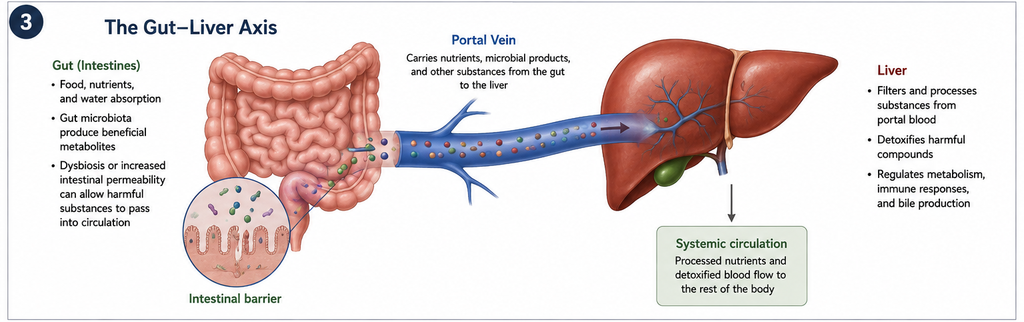
Here’s the piece I find genuinely underappreciated in most consumer fatty liver content: your liver and your gut are in constant biochemical conversation, connected directly by the portal vein, which carries blood — and everything absorbed with it — straight from your intestines to your liver before it reaches the rest of your body. This relationship is often called the gut-liver axis.
A few concrete ways this plays out:
- Gut bacterial imbalance (dysbiosis) can increase intestinal permeability — sometimes loosely called “leaky gut” — allowing bacterial byproducts like lipopolysaccharide (LPS) to reach the liver via the portal vein and trigger low-grade inflammation there, adding fuel to the fatty liver-to-MASH progression.
- Short-chain fatty acids, produced when gut bacteria ferment fiber, appear to support healthier liver fat metabolism — another reason fiber-rich foods (vegetables, legumes, whole grains) do double duty for your gut and your liver simultaneously.
- Bile acid signaling, which your gut microbiome directly influences, plays a role in how your body regulates fat and glucose metabolism.
Practically, this means the same dietary fiber and Mediterranean-pattern changes that help your liver are also feeding a healthier gut microbiome — the two goals aren’t separate projects. If you’re also dealing with bloating or digestive symptoms alongside a fatty liver diagnosis, it’s worth reading how we’ve covered the gut-brain connection and stress’s effect on digestion elsewhere on this site, since chronic stress also feeds into the same metabolic and inflammatory pathways.
How Long Does It Take to Reverse Fatty Liver?
This varies by cause and by how consistent the changes are, but rough timelines that come up often in clinical practice:
- Alcohol-related fatty liver: improvement can begin within a few weeks of stopping alcohol
- MASLD from diet and metabolic factors: meaningful reduction in liver fat is often seen within 3–6 months of sustained weight loss and dietary change, confirmed on follow-up ultrasound or blood work
- Full normalization of liver enzymes and imaging can take 6–12 months depending on your starting point and how much weight loss is needed
Your doctor will typically recheck liver enzymes (ALT, AST) and sometimes repeat imaging or a FibroScan at intervals to track real progress rather than relying on how you feel, since fatty liver is frequently symptom-free even as it improves or worsens.
Supplements: What the Evidence Actually Supports (and Doesn’t)
A lot of “liver detox” products marketed for fatty liver don’t have solid evidence behind them, and a “detox” framing itself is somewhat misleading — your liver doesn’t need help detoxing in the way that marketing implies. That said, a few things have more legitimate research behind them:
- Vitamin E has evidence for reducing liver inflammation specifically in non-diabetic patients with biopsy-confirmed MASH, but it’s not appropriate for everyone and carries its own risks at high doses — this is a “talk to your doctor” item, not a self-prescribe one.
- Milk thistle (silymarin) has some supportive but inconsistent evidence; it’s not harmful for most people, but it’s not a substitute for the diet and weight-loss changes above.
- Omega-3 fatty acids, largely through the fatty fish already recommended in a Mediterranean pattern, have more consistent support than most standalone supplements sold specifically for “liver health.”
The honest summary: no supplement reverses fatty liver on its own. The five steps above are doing the actual work.
When to See a Doctor
You should be working with a physician — not managing this alone — if you have any of the following:
- A fatty liver diagnosis alongside elevated liver enzymes (ALT/AST) on bloodwork
- Known type 2 diabetes, obesity, or metabolic syndrome alongside a fatty liver finding
- Persistent right-upper-abdominal discomfort, unexplained fatigue, or unintentional weight loss
- A family history of liver disease or cirrhosis
- Heavy alcohol use alongside a fatty liver finding
Your doctor can determine your actual stage on the spectrum — simple steatosis versus MASH versus fibrosis — since that stage genuinely changes both the urgency and the specifics of your plan, something no article can determine from a distance.
Frequently Asked Questions
Can fatty liver be reversed completely?
In the earlier stages (simple steatosis, and often early inflammation), yes — the fat and inflammation can clear substantially or fully with sustained weight loss, dietary change, and exercise. Advanced fibrosis is harder to fully reverse, though progression can usually still be halted.
What foods should I avoid with fatty liver?
The biggest offenders are added sugar (especially sugar-sweetened beverages), refined carbohydrates, fried foods, and excess alcohol. Whole fruit, healthy fats like olive oil, and fiber-rich foods are not the problem.
Does losing belly fat specifically help fatty liver?
Yes — visceral fat (the fat around your organs, concentrated in the abdomen) is more metabolically active and more closely tied to liver fat accumulation than fat elsewhere on the body, which is part of why waist circumference is often tracked alongside body weight.
Is intermittent fasting good for fatty liver?
Some research suggests time-restricted eating patterns can help by improving insulin sensitivity, but the evidence is less robust than for the Mediterranean diet and consistent calorie/weight management overall. It’s a reasonable tool for some people, not a required one.
This article is for general educational purposes and isn’t a substitute for personalized medical advice. If you’ve been diagnosed with fatty liver or MASLD, work with your physician or a gastroenterologist/hepatologist to determine your specific stage and treatment plan.